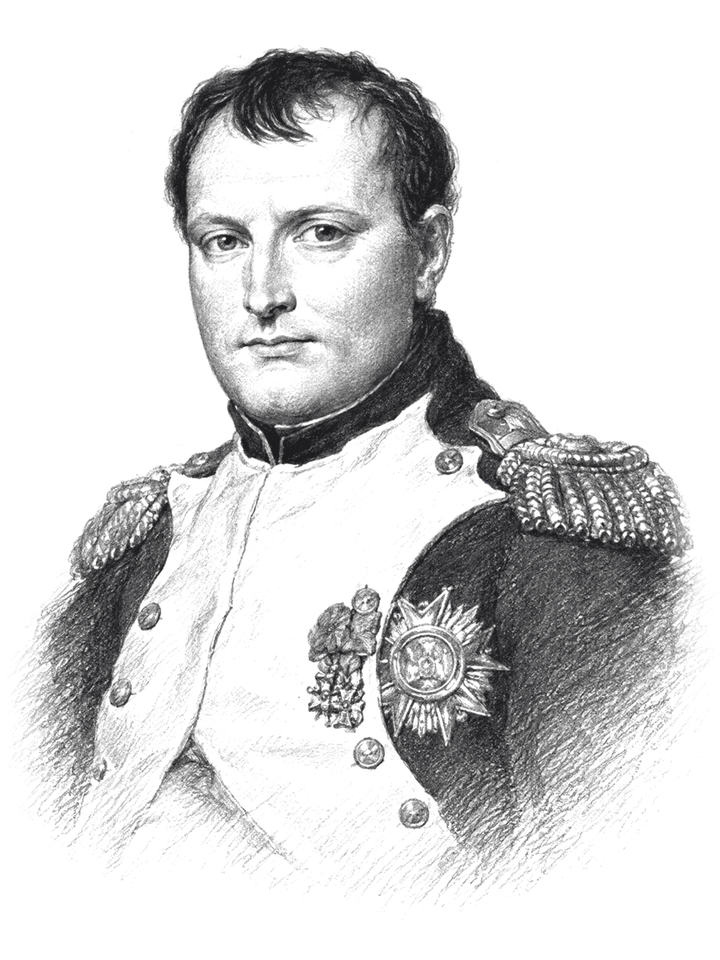
Mark
Zuckerberg
The Empire Builder
He runs a company the way a Roman emperor ran a state: own the ground you stand on, neutralize rivals before they mature, keep control that cannot be voted away, and never stop expanding.
Primary lens: Founders #435, “Mark Zuckerberg’s Empire” (Sep 28, 2026), on Jeremy Stern’s Colossus profile. Plus his own words on Dwarkesh Patel, Joe Rogan, Lex Fridman, the 2012 Hacker Way letter and FTC trial exhibits.

The Dictator’s Dilemma
Stern’s organizing idea: the more an empire grows, the more its ruler depends on other people to know what is true. Zuckerberg knows this and is, in Stern’s word, paranoid about it. His answer is to go around the hierarchy for raw signal.
Eight principles
Think in empires
Rome is his working manual. Augustus is the model: expansion, then a long peace built on trade.
“For these, I set no bounds in space or time.”The Aeneid, recited to Stern · Founders #435
Never rent the platform
Every major bet since 2013 is an attempt to stop living on Apple’s and Google’s land.
“Nah, f*** that.”On being told by platform owners what he can build · Stern, 2026
Buy or copy before it matures
Price threats early. The cheapest time to neutralize a rival is before the market agrees it is one.
“It is better to buy than compete.”2008 email, FTC v. Meta exhibit
Speed first, then stability
Velocity is the default. When scale makes breakage expensive, he rewrites the motto rather than slowing down.
“The biggest risk is not taking any risk.”Y Combinator Startup School, 2011
Control is the moat
Majority voting power lets him run bets that no board or market would approve on its own schedule.
Stern’s observation: his removal is effectively impossible, so he may still rule in fifty years.Colossus, Sep 2026
Hoard signal, fight the filter
A self-described data consumer and micromanager who knows the court will tell him what he wants to hear.
Staff name the risk themselves: “M.M.H.” projects, short for Make Mark Happy.Stern, Colossus
Reset hard when behind
He does not defend a losing position. He rebuilds the organization around the new reality, fast.
“I can get obsessive.”To Stern, 2026
Building is identity
There is no exit plan. Around year eighteen, Priscilla Chan asked whether they could be done. The answer was no.
“I’m never going to stop.”Founders #435, via Stern
How the thinking changed
The Hacker
Connect everyone and ship faster than anyone. Growth comes first; governance can wait.
Sean Parker warned the “domination” talk could be read in an antitrust case, and noticed an imperial tendency.
Mobile survival
Mobile is existential. Own the attention layer on phones someone else controls.
A shaky IPO and a desktop-first product. Response: rebuilt mobile-first, bought Instagram and WhatsApp, founded FAIR under Yann LeCun.
Crisis and defense
From “neutral platform” to “we have a responsibility.”
Election interference, Cambridge Analytica (87M users), Senate testimony in 2018, a $5B FTC fine in 2019.
The metaverse
Own the next computer outright, so no platform owner can tax or block you again.
Apple’s tracking change hit ads. The rename to Meta doubled down; the 2022 stock collapse forced a rethink of cost, not direction.
Efficiency and open AI
Flatter, leaner org. Open-source Llama as “the Linux of AI,” a way to commoditize rivals’ moats.
Investor pressure plus the ChatGPT shock. Open weights became strategic leverage.
Superintelligence
Personal superintelligence for everyone, delivered through glasses. Free expression over fact-checking.
Llama 4 fell behind. He bought talent at any price, shipped the closed Muse Spark (Apr 2026), then reopened with Muse Glimmer (Aug 2026). Open is now a tactic, not a creed.
The numbers behind the posture
People using Meta products, about one in every 2.3 alive (Stern, 2026)
Top of 2026 capex guidance, raised in April 2026
His share of Meta voting power (2025 proxy filings)
WhatsApp, 2014, after Instagram for $1B in 2012
Cumulative Reality Labs losses absorbed
For 49% of Scale AI to reboot the AI effort, June 2025
Where the model strains
Admires Augustus for a trade-based, positive-sum peace
vs“Carthage must be destroyed”; buy-or-clone as standard practice
Wants every data point
vsSurrounded by teams incentivized to make him happy
Resents platform landlords
vsRuns the largest attention platform on earth
Open source as “the Linux of AI” (2024)
vsA closed frontier model two years later (2026)
What to take from it
Name the landlord you depend on, and write down your exit plan.
Price competitive threats early. Every year you wait, the acquisition gets more expensive.
Build channels that bypass your own filters: skip-levels, raw dashboards, people paid to disagree.
Treat principles like open source as instruments. Say so when the instrument changes.
Founders #435, David Senra (Sep 28, 2026) · Jeremy Stern, “Mark,” Colossus (Sep 2026) · Meta, “Personal Superintelligence” (Jul 2025) · Meta Q1 and Q2 2026 earnings (Fortune, CNBC, DCD) · FTC v. Meta trial exhibits (2025) · SEC proxy filings (2025) · Joe Rogan Experience (Jan 2025) · The Hacker Way, Form S-1 (2012) · TechCrunch on Muse Spark (Apr 2026) · Futurum on Muse Glimmer (Aug 2026). Quotes shortened; paraphrases are marked as observations.